Pixel pitch is one of the most misunderstood LED screen specifications—and one of the most expensive mistakes event planners make.
Many people assume that a smaller pixel pitch automatically means a better LED screen. In reality, choosing pixel pitch without understanding viewing distance, screen size, and content type often leads to overspending with little to no visible benefit.
This article explains what pixel pitch actually means, why smaller is not always better, and how professionals choose the right LED screen for each event.
Table of Contents
ToggleWhat Pixel Pitch Really Means
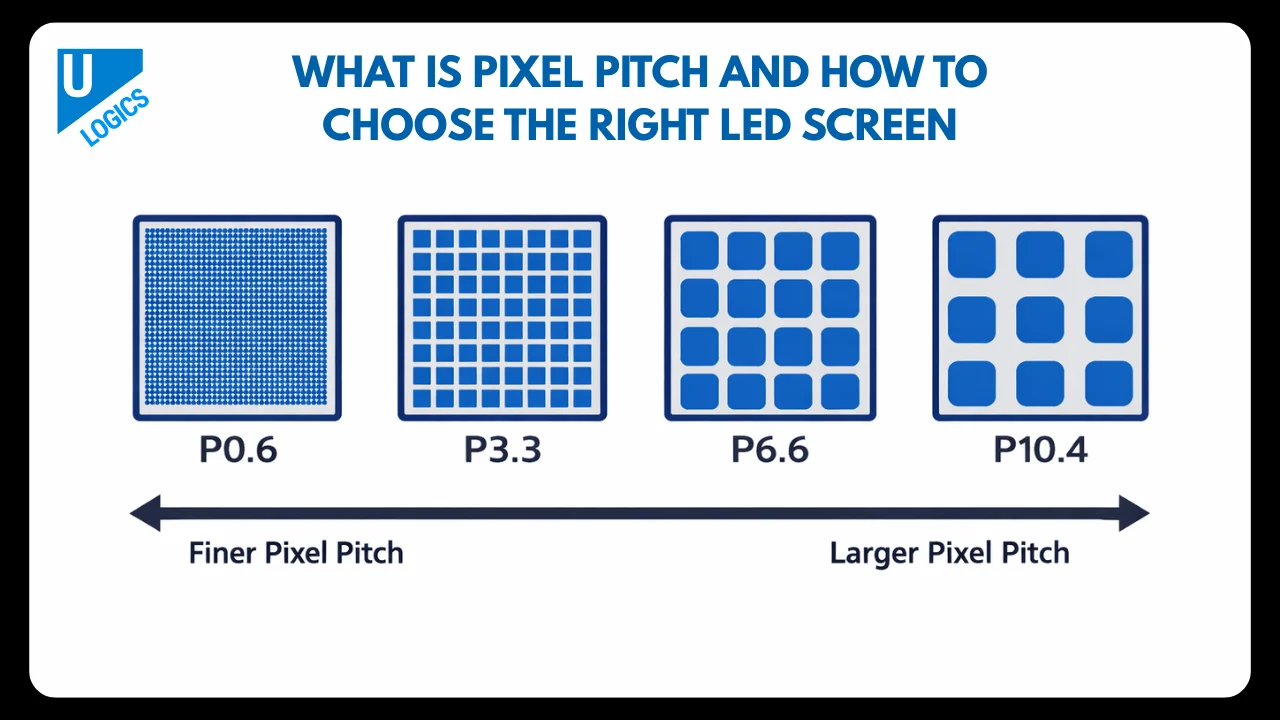
Pixel pitch refers to the distance (in millimeters) between the center of one LED pixel and the next.
In simple terms:
- Smaller pixel pitch = higher resolution, closer viewing
- Larger pixel pitch = lower resolution, longer viewing distance
Pixel pitch is typically written as P1.9, P2.6, P3.9, P4.8, and so on. The number indicates how close together the pixels are.
What pixel pitch does not tell you:
- How bright the screen is
- How large the screen should be
- Whether it’s suitable for indoor or outdoor use
Those decisions come later.
Why Smaller Pixel Pitch Is Not Always Better
This is where most LED budgets get wasted.
A very fine pixel pitch only provides a benefit when the audience is close enough to perceive the extra detail. If the audience is far away, that resolution is effectively invisible.
Common mistakes include:
- Using ultra-fine pixel pitch for large venues
- Choosing high resolution for screens viewed from long distances
- Paying for detail the audience cannot see
From a distance, a P1.9 screen and a P3.9 screen can look nearly identical—while costing dramatically different amounts.
Viewing Distance Is the Real Decision Factor
Professionals don’t choose pixel pitch first. They start with viewing distance.
A practical rule:
- Close viewing distances require smaller pixel pitch
- Longer viewing distances allow for larger pixel pitch
If the audience is seated far from the screen, screen size and brightness matter far more than pixel density.
Ignoring viewing distance is the fastest way to choose the wrong LED system.
Screen Size and Pixel Pitch Work Together
Pixel pitch does not exist in isolation. Screen size plays an equal role.
A small screen with ultra-fine pixel pitch may still feel underwhelming if it’s too small for the room. A larger screen with slightly larger pixel pitch can deliver a stronger visual impact.
Professionals balance:
- Screen dimensions
- Pixel pitch
- Viewing distance
- Content readability
Resolution alone does not create impact—scale and placement do.
Content Type Matters More Than Most People Realize
What you display on the LED screen affects pixel pitch choice.
For example:
- Text-heavy presentations require higher clarity
- Detailed branding benefits from finer resolution
- Video content is more forgiving at larger pixel pitch
- Live camera feeds depend on viewing distance and screen size
Choosing pixel pitch without considering content type often results in visuals that feel soft, unreadable, or unnecessarily expensive.
Indoor vs Outdoor Pixel Pitch Considerations
Pixel pitch selection changes depending on environment.
Indoor LED screens often use:
- Smaller pixel pitch for close viewing
- Controlled lighting conditions
- Higher perceived resolution
Outdoor LED screens typically use:
- Larger pixel pitch
- Longer viewing distances
- Higher brightness rather than higher resolution
This is why outdoor LED screens with larger pixel pitch can still look excellent they are designed for distance, not close inspection.
When Pixel Pitch Becomes a Liability
Using the wrong pixel pitch creates problems that cannot be fixed during the event.
Issues include:
- Visible pixelation from close seating
- Overpaying for resolution that adds no value
- Reduced brightness efficiency
- Increased power and processing demands
Once the LED wall is built, pixel pitch cannot be changed. The mistake is permanent for the event.
How Professionals Choose Pixel Pitch
Experienced LED teams don’t start with numbers. They ask:
- How far is the closest viewer?
- How large will the screen be?
- What content will run on the screen?
- Is the environment controlled or unpredictable?
- What level of detail actually matters to the audience?
Only after answering these questions does pixel pitch get selected.
This approach avoids unnecessary cost and ensures the screen performs exactly as intended.
Final Takeaway
Pixel pitch is not about choosing the smallest number available. It’s about choosing the right balance between resolution, viewing distance, screen size, and content type.
When pixel pitch is selected correctly:
- Content looks clean and readable
- Budgets are used efficiently
- The LED screen feels intentional, not excessive
When it’s chosen blindly, the screen either underperforms or costs far more than it should.