
A good church sound system does two jobs: every word of the sermon is clear in every seat, and worship music sounds full without being too loud. Getting both depends far more on design than on the brand of speakers. This guide walks through how we design church sound systems, from the room itself to the mixer in the booth.
Start with the room
Every sanctuary sounds different. High ceilings, hard walls and wood or stone surfaces create long reverberation, which makes music feel big but blurs speech. Carpet, padded seating and people absorb sound. Before choosing any equipment, we look at the size and shape of the room, the ceiling height, the seating layout and balconies, and what the room is used for: preaching, choir, a full worship band, or all three. If the room is very reverberant, some acoustic treatment can do more for clarity than any speaker upgrade.
Coverage: every seat should sound the same
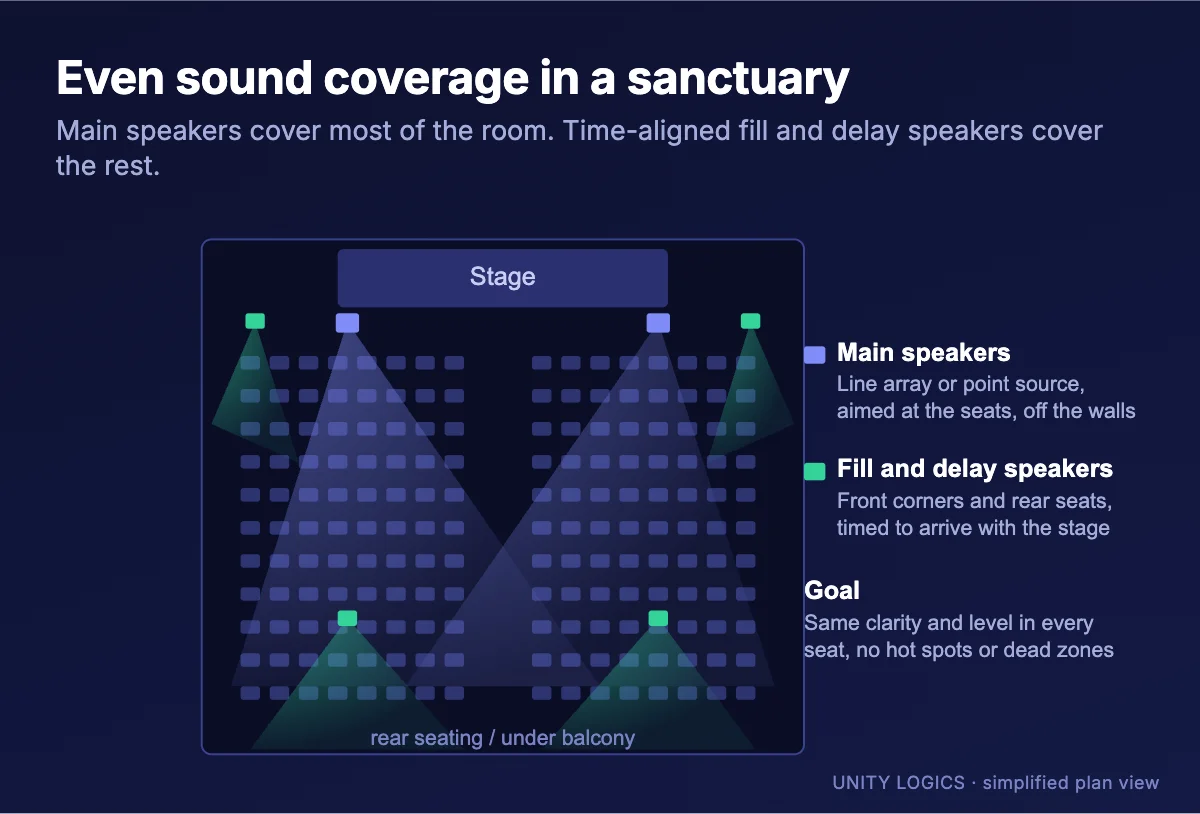
The goal is even sound from the front row to the back wall, with no hot spots or dead zones. Speakers are chosen and aimed so their coverage matches the seating area, and kept off the walls and ceiling as much as possible, because sound that hits hard surfaces turns into echo. Areas the main speakers cannot reach, such as balconies, side seating, the narthex or overflow rooms, get their own fill or delay speakers, timed so the sound arrives together with the sound from the stage.
Line array or point source?
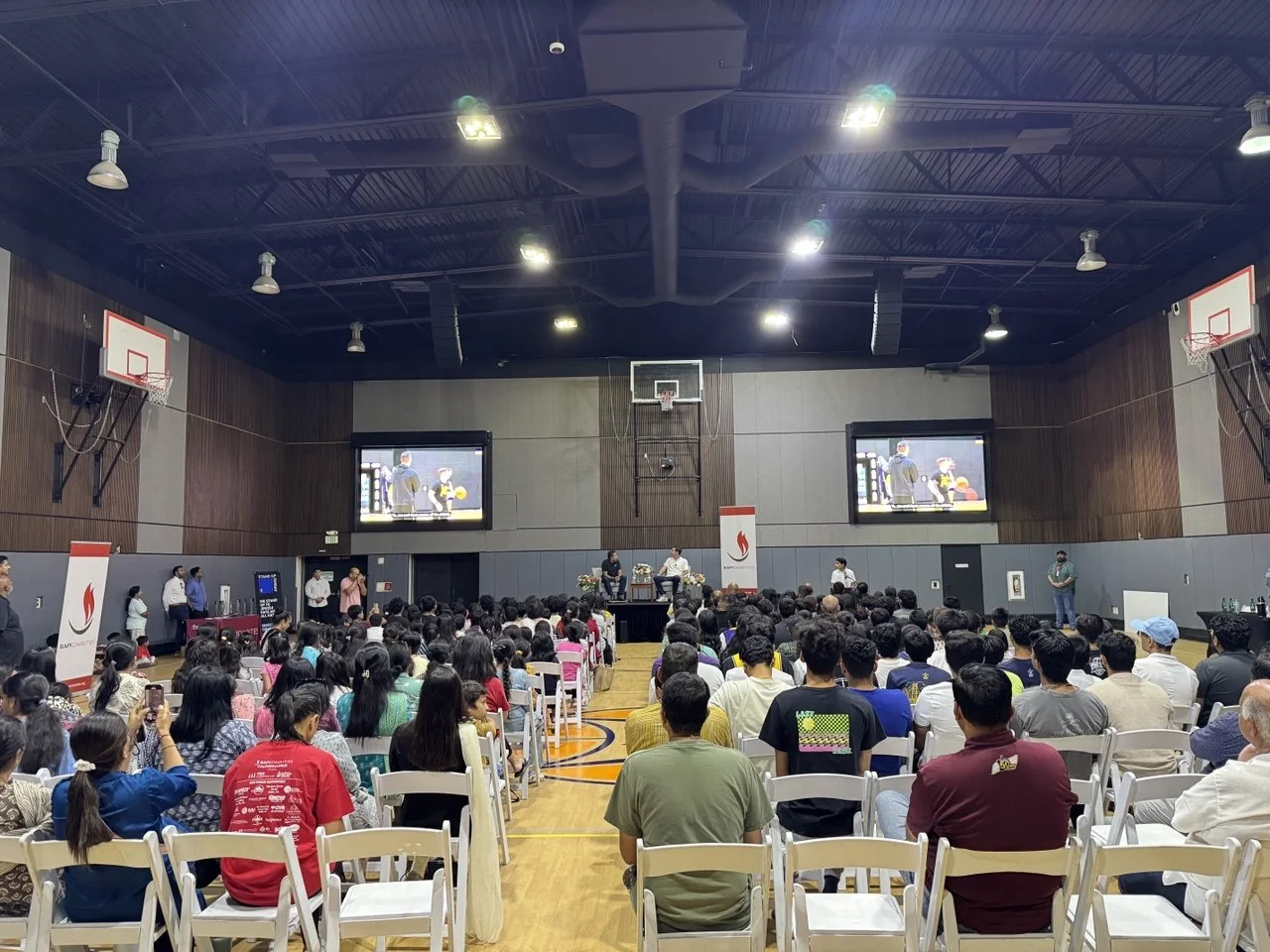
Line-array speakers project sound evenly over a long distance and keep it off the ceiling, which makes them a good fit for deep or reverberant rooms. Point-source speakers are simpler and often the better value for smaller or wider rooms. Many systems combine both. At the St. Edward Catholic Church Family Center in Corona, we used RCF C 32 loudspeakers with RCF HL 35 line arrays for the main coverage, and RCF CM 06 FF speakers to fill areas outside the main pattern. In the BAPS gymnasium in Chino Hills, line arrays covered a large, hard-surfaced room from a minimal number of mounting points.
Low end for worship music
Contemporary worship with drums and bass usually needs subwoofers so the music feels full without pushing the main speakers too hard. Traditional services with organ, piano or choir may not need them at all. Placement matters, because bass builds up in corners and can sound uneven across the room.
The mixer and signal processing
A digital mixer is now the heart of most church systems. It handles mixing, speaker processing, routing and presets in one place, and can create separate mixes for the room, monitors, live stream and overflow rooms. At St. Edward and at Temple Solel in Cardiff we used Allen & Heath SQ mixers, with Dante audio networking at Temple Solel to route audio to different zones over standard network cable.
Microphones and monitors
Choose microphones for how people actually use them: headsets for pastors who move, handhelds for singers, and choir microphones placed above and in front of the singers. Our church wireless microphone guide covers this in detail. On stage, in-ear monitors reduce stage volume and feedback compared with floor wedges, which makes the room mix cleaner.
Tuning and training
After installation, the system should be measured and tuned in the room: speaker timing, equalization and limits set so it sounds natural and is protected from damage. Then come presets and training. Most churches rely on volunteers, so simple scenes for each kind of service, clearly labeled controls and a short checklist make a bigger difference to Sunday morning than any single piece of equipment.
Hearing assistance
Many churches add an assistive listening system so members with hearing loss can hear the service through a personal receiver or their own hearing aids. It is easiest to plan this into the design from the start.
Planning your project
Whether you are upgrading speakers or starting from scratch, begin with a walkthrough and a written design that shows where each speaker goes and why. Our guide on how to choose a church AV integrator lists the questions worth asking. To see our church work, visit church AV integration, or request a free site survey.