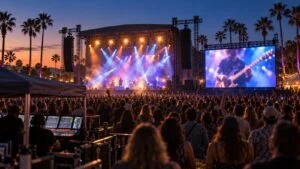
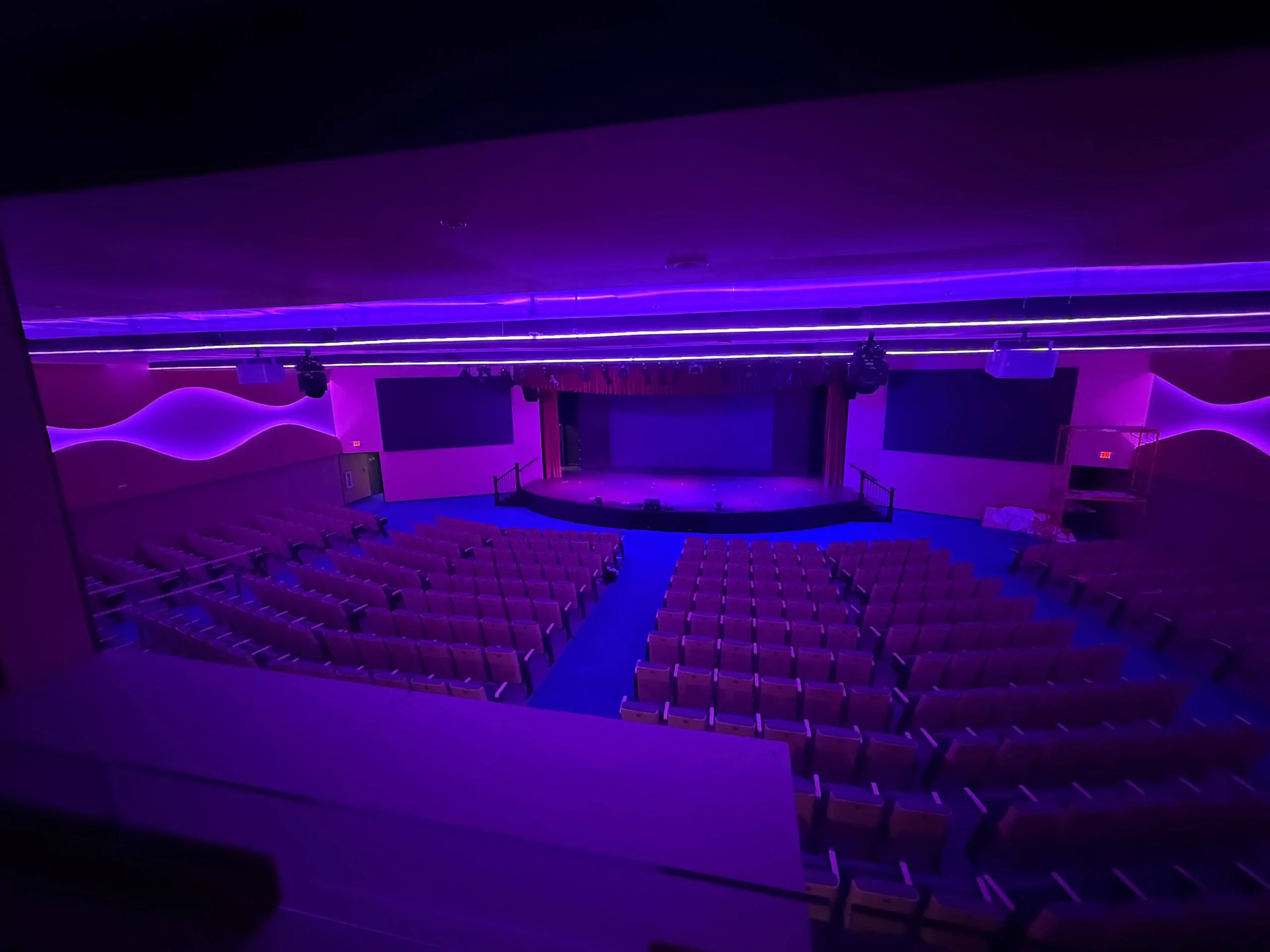
Many churches reach the point where the old projector is dim, the lyrics are hard to read with the lights up, and someone asks whether it is time for an LED wall. Both technologies can work well in a sanctuary. The right choice depends on your room, your lighting, how often you use the screens and your budget. Here is how we help churches compare them.
How each one works
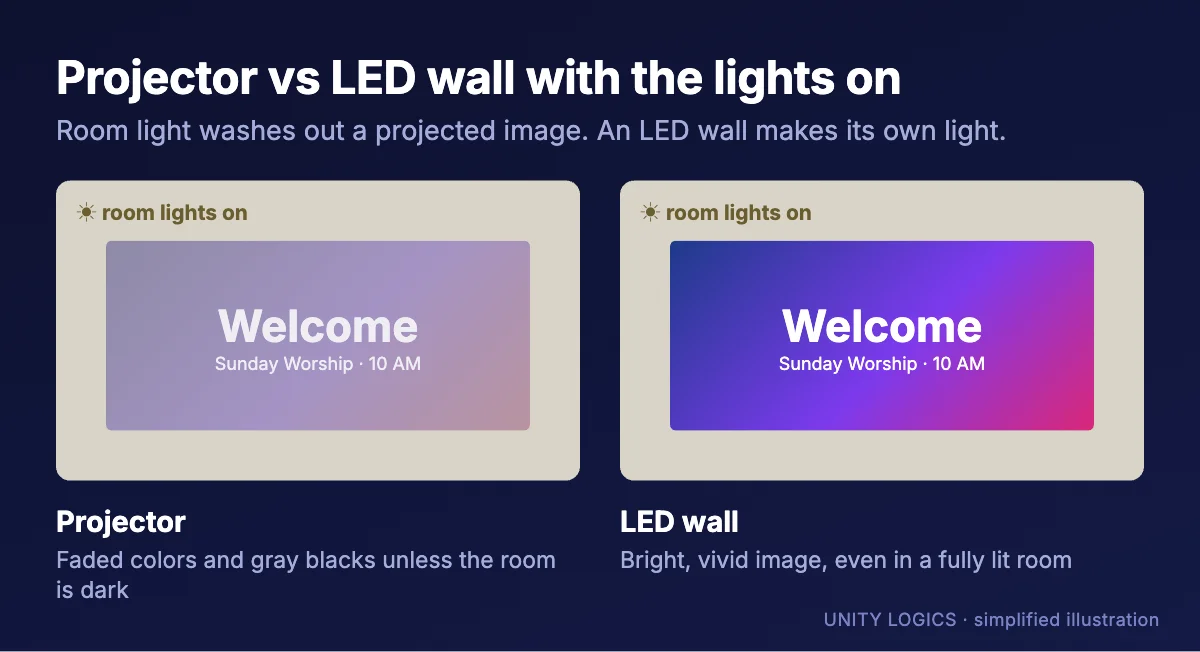
A projector shines light onto a screen, so the image is only as bright as the light that reaches the screen and bounces back. Any other light in the room, from windows, stage lighting or house lights, washes the picture out. An LED wall makes its own light: thousands of tiny LEDs form the image directly, so it stays bright and colorful even with the room lights on.
Brightness and room lighting
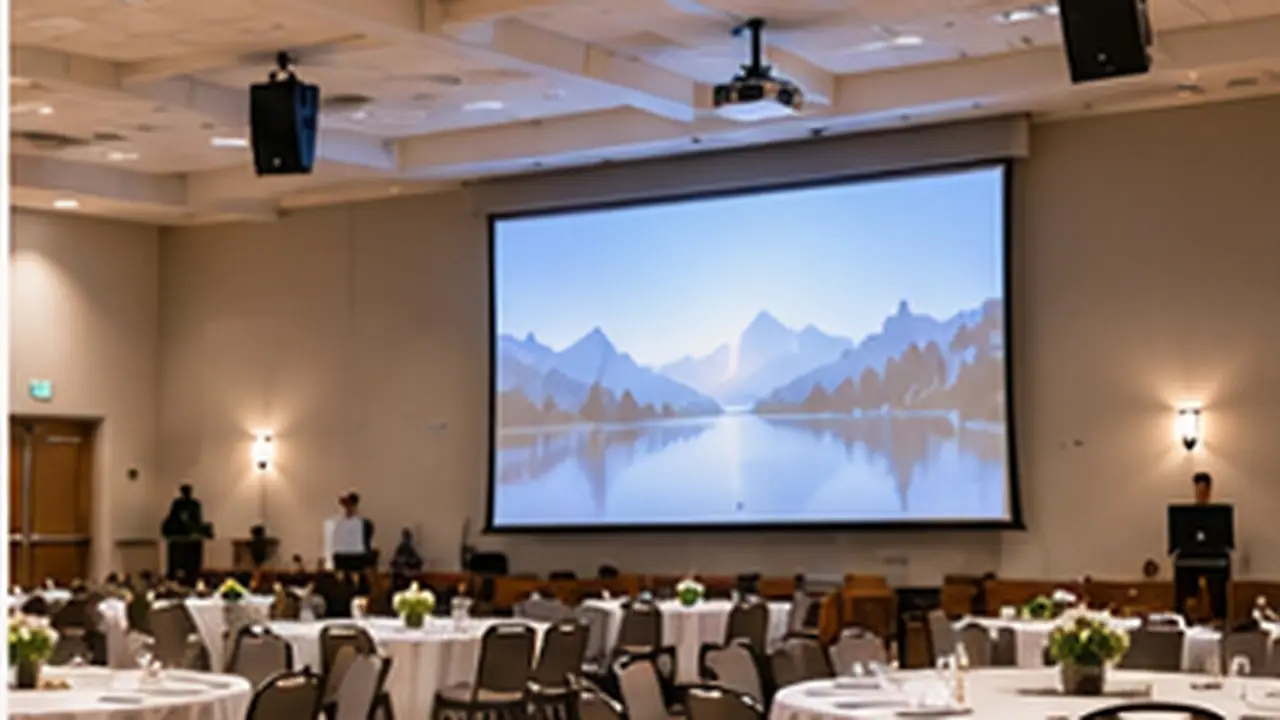
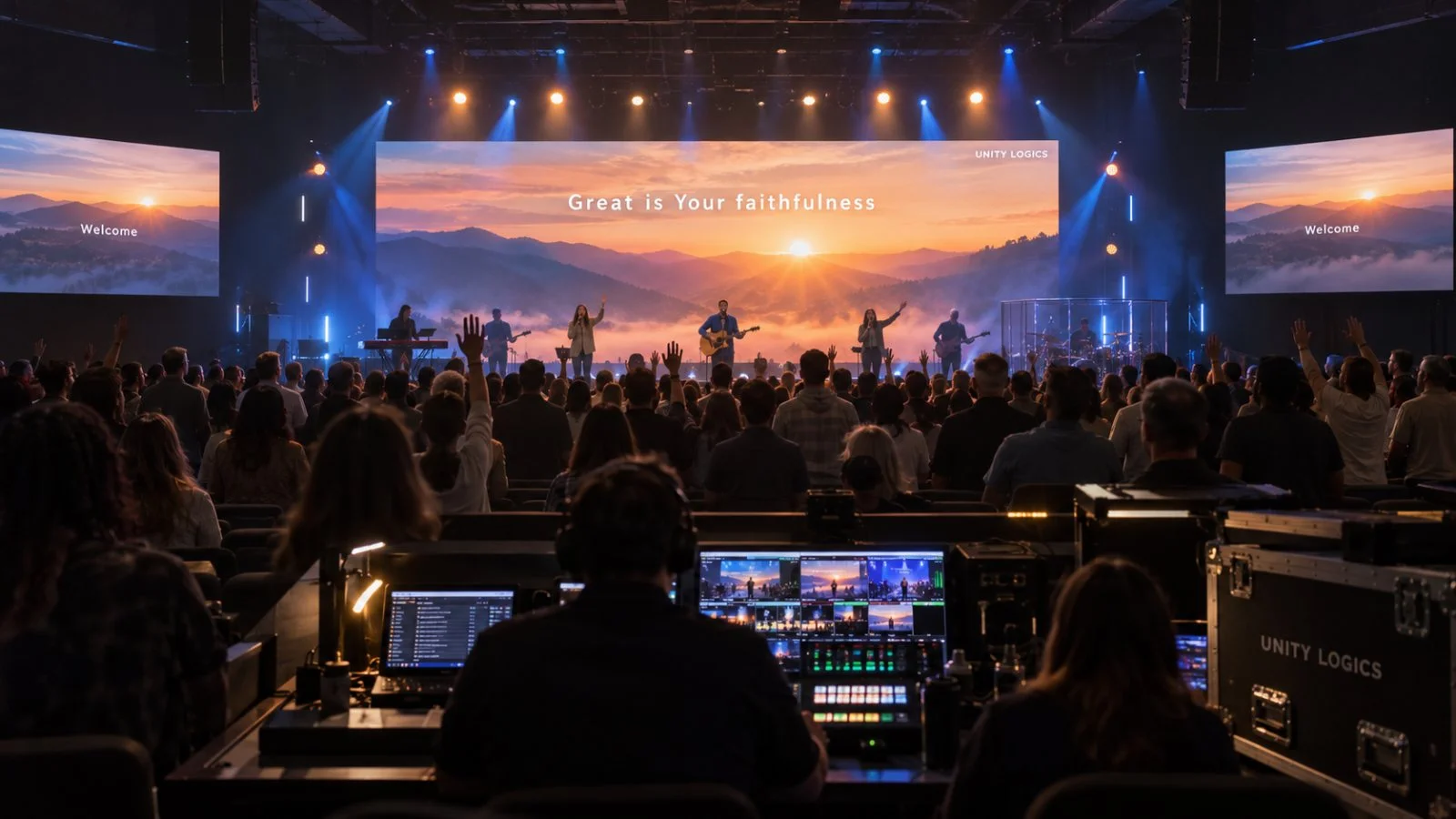
This is the biggest difference. If your sanctuary has windows, daytime services or stage lighting for cameras and live streaming, a projector often looks faded unless you dim the room. An LED wall is easily bright enough for a fully lit room, and is usually turned down, not up, for indoor services. If your room is dark and you can keep it that way, a good projector can still look excellent.
Size and shape
Projectors are an easy way to get a very large image for the money, as long as there is a clear throw path from the projector to the screen and nobody walks through the beam. LED walls are built from panels, so they can be almost any width and height, curved, or split into several screens. They need a wall, truss or frame strong enough to carry the panels.
Picture quality and viewing distance
For an LED wall, sharpness depends on the pixel pitch, the spacing between LEDs. The closer your front row, the finer the pitch you need. Our pixel pitch guide explains how to choose. A projector gives a smooth image at any distance, but contrast drops as soon as there is light in the room.
Lifespan and maintenance
Projectors need lamp or light-source replacement over time, filters cleaned, and the image refocused and realigned. LED walls have no lamps or filters. Individual modules can be swapped from the front or back if one fails, which is why we recommend keeping spare modules on hand. See our LED wall maintenance guide for the routine care involved. For events, conference rooms and other spaces, see our general projector vs LED screen guide.
Cost
A projector and screen usually cost less up front, especially for a very large image. An LED wall costs more at first but lasts longer, needs less upkeep and works in any lighting. As a reference, our published LED wall packages start at $10,050 for an 8.2 × 4.9 ft P3.91 indoor wall, including the panels, video processor, mounting hardware and cables. Our LED wall cost guide has more real examples.
Quick comparison
- Bright room, windows or stage lighting: LED wall.
- Dark room and a tight budget: projector.
- Live streaming with cameras: LED wall, since the room can stay lit for the cameras.
- Unusual shapes or several screens: LED wall.
- Very large image at the lowest cost: projector.
What we see in churches
When a church already uses its screens every week for lyrics, scripture, announcements and camera close-ups, an LED wall is usually the better long-term investment. At a worship auditorium we equipped in Birmingham, Alabama, the LED screen at the front carries lyrics, messages and video, and volunteers recall audio, lighting and video scenes at the touch of a button.
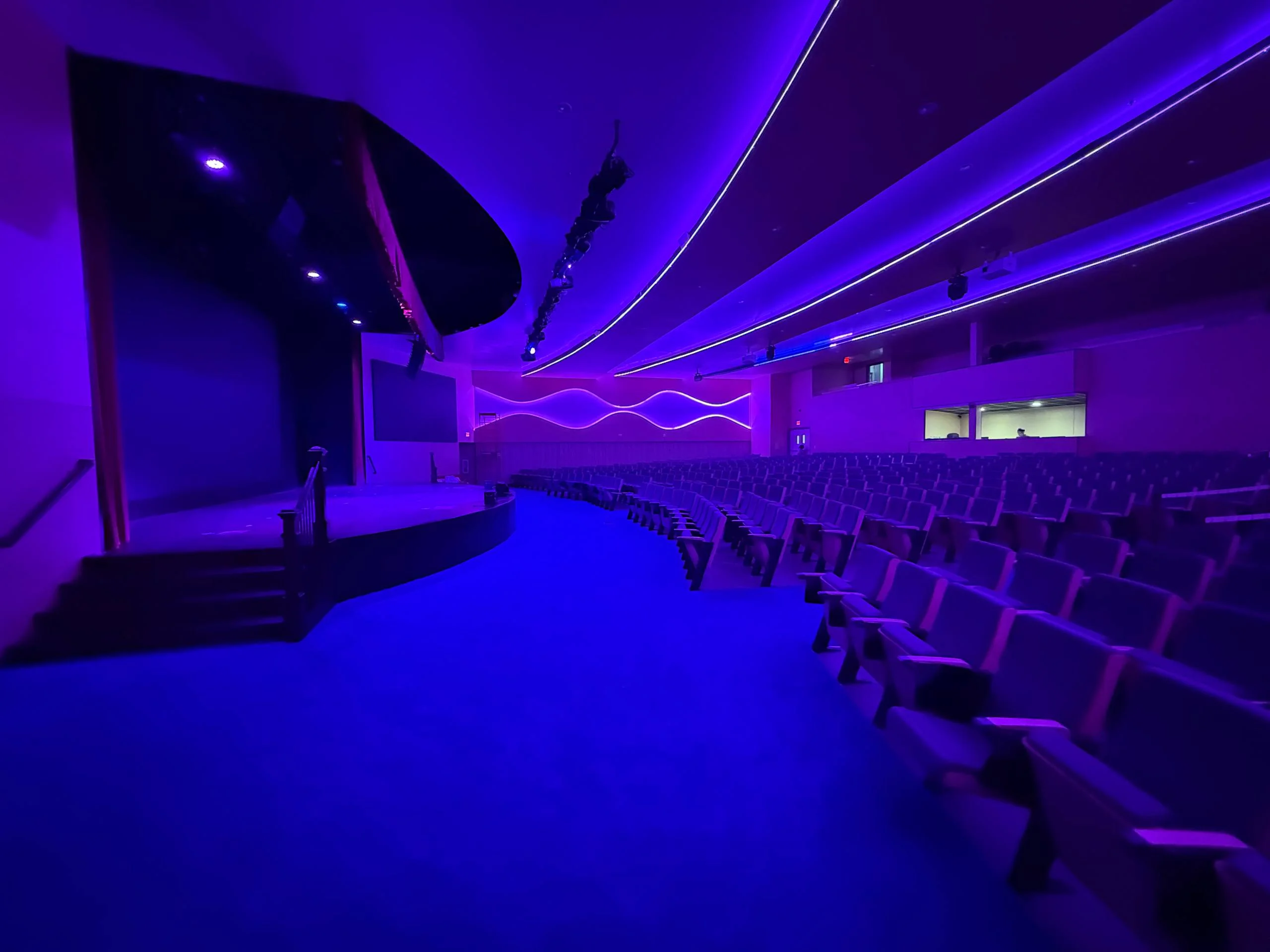
If you are not sure which is right for your room, read our guide to LED walls for churches or ask us for a free site survey. We will look at your sightlines, lighting and mounting options and show you both choices side by side.