
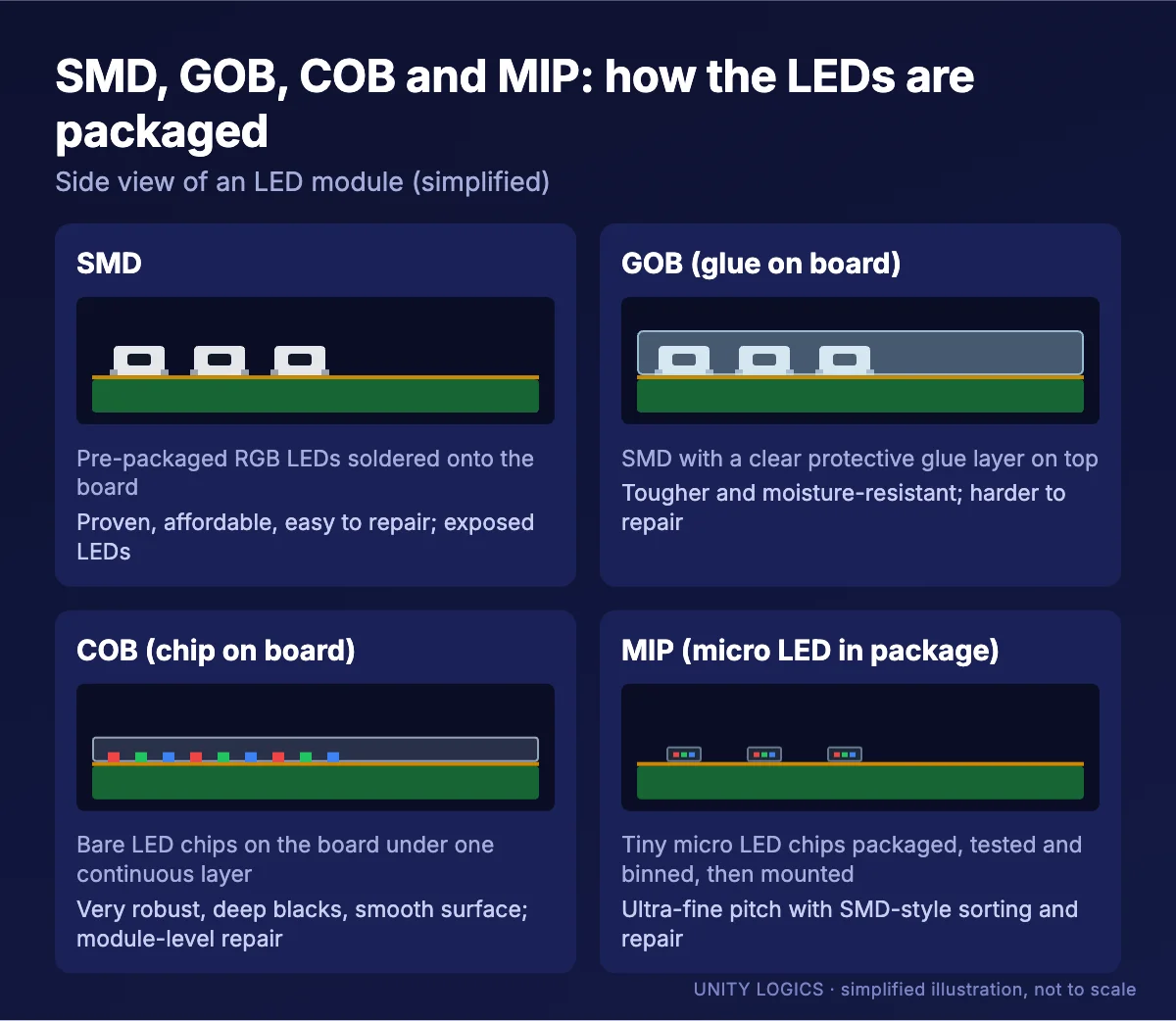
SMD, GOB, COB, MIP: walk into any LED screen conversation and you will hear these letters within minutes. They describe how the LEDs are packaged and mounted on the module, and that choice affects how tough the screen is, how it looks up close, how deep the blacks are, how it is repaired and what it costs. Here is what each one means, which is better for which job, and where LED technology is heading.
The short answer
- SMD is the proven, affordable all-rounder, ideal for rental, events and most screens at P1.9 and above.
- GOB is SMD with a protective coating, for screens that get touched, knocked or moved a lot.
- COB is the robust choice for fine-pitch screens that people view up close, with deep blacks and a smooth surface.
- MIP brings micro LED chips into an SMD-style process, aimed at ultra-fine pitch with strong color consistency.
There is no single “best” technology. The best one depends on pixel pitch, viewing distance, how the screen is used and the budget.
SMD (surface-mounted device)
In SMD, the red, green and blue LED chips are first packaged together into a small component, the LED “lamp,” and that component is soldered onto the module’s circuit board. SMD has been the industry standard for indoor and rental LED screens for years.
- Strengths: mature and affordable, excellent color consistency because each LED can be sorted (binned) before assembly, easy to repair at the single-LED level, and available in a huge range of pitches.
- Limits: the LEDs sit exposed on the surface, so hard knocks during setup or by visitors can break them off, especially on fine-pitch modules. As pitch gets smaller, there is less room for the packages, and below about P1.2 SMD becomes harder and less practical.
- Best for: rental and touring walls, concerts, conferences, churches and most installs at P1.9 to P3.9, plus outdoor screens with weather-sealed SMD.
GOB (glue on board)
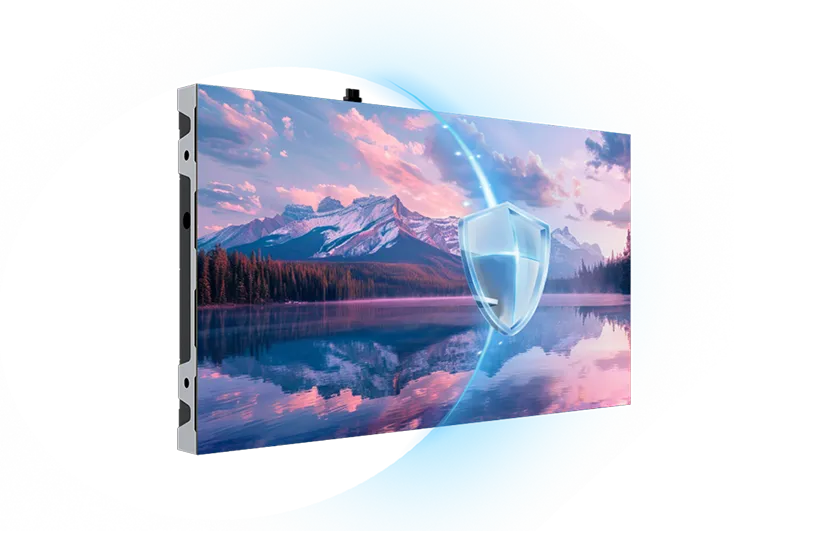
GOB starts with an SMD module and adds a layer of clear protective glue over the LEDs. The coating protects against impact, dust and moisture and gives a more even, matte surface.
- Strengths: much tougher than bare SMD at a modest extra cost, with better protection against moisture and static.
- Limits: repairs are harder because the coating has to be removed and reapplied, and the coating must be done well to avoid uneven color or haze.
- Best for: screens within reach of people, such as lobbies, retail, floor-level stages, trade show booths and rental walls that are handled often.
COB (chip on board)
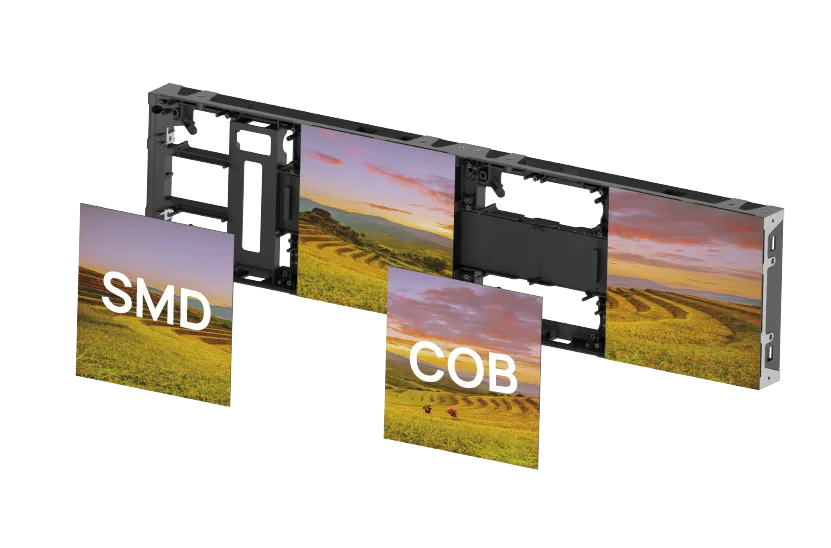
COB skips the individual lamp. Bare LED chips are mounted directly on the circuit board and sealed together under one continuous protective layer. Newer COB designs use flip-chip LEDs, which connect directly to the board without fine bonding wires, for better heat transfer and reliability.
- Strengths: very robust against impact, moisture and dust; deep blacks and high contrast; a smooth, matte surface with no visible pixel “bumps”; good heat dissipation; and very fine pitches below P1.0 are commercially available.
- Limits: individual LEDs cannot be replaced, so a failed area is repaired by swapping the module. Color consistency between modules depends on careful manufacturing and calibration, which is why it pays to buy enough spare modules from the same batch.
- Best for: boardrooms, control rooms, broadcast studios, lobbies and any fine-pitch screen viewed from a few feet away, typically P0.9 to P1.5.
MIP (micro LED in package)
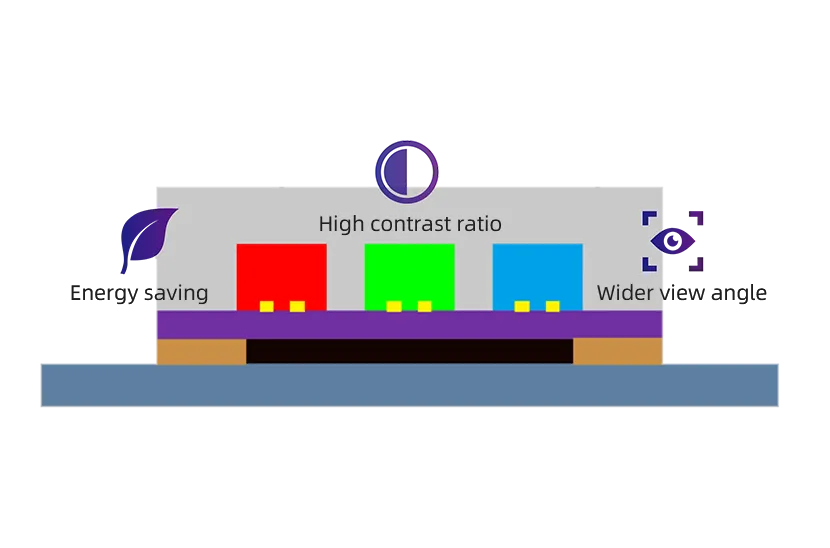
MIP uses tiny micro LED chips, much smaller than conventional LED chips, and packages them into very small standard components. Each package can be tested and binned before it is mounted, just like SMD, and then placed using standard SMD assembly equipment.
- Strengths: the small chips leave more black space on the module for high contrast; pre-sorting gives strong color consistency; it suits ultra-fine pitches below P0.9; and small packages can be replaced more easily than a whole COB module.
- Limits: it is the newest of the four, so there is less long-term field history, and the cost per square foot is currently higher than COB at the same pitch, although prices are falling.
- Best for: premium fine-pitch installs, ultra-fine pitch walls, and fine-pitch screens that may be reconfigured or moved.
Side-by-side comparison
| SMD | GOB | COB | MIP | |
|---|---|---|---|---|
| How it is built | Packaged LEDs soldered on the board | SMD plus a clear protective coating | Bare chips sealed on the board | Micro LED chips in tiny packages |
| Typical pitch | P1.2 and up | P1.2 and up | About P0.6 to P2.5 | About P0.4 to P1.5 |
| Impact protection | Fair | Good | Excellent | Good |
| Contrast and blacks | Good | Good | Excellent | Excellent |
| Look up close | Visible pixel structure | Smoother | Very smooth, matte | Very smooth |
| Color consistency | Excellent (binned LEDs) | Very good | Good to very good (calibration matters) | Excellent (binned packages) |
| Repair | Single LED | Harder (coating) | Whole module | Single package or module |
| Relative cost | Lowest | Low | Medium to high | Highest today |
Which is better for which use?
| Use | Our usual pick | Why |
|---|---|---|
| Rental, concerts and events | SMD or GOB | Proven, affordable, easy to repair between shows |
| Church sanctuary (P1.9 to P3.9) | SMD or GOB | Viewed from a distance; great value |
| Church or venue with close seating (P1.5 and finer) | COB | Robust, smooth, deep blacks |
| Boardroom and conference room | COB or MIP | Close viewing, text clarity, durability |
| Control room and 24/7 operation | COB | Reliability and heat handling |
| Broadcast and virtual production | COB, MIP or black-face SMD | Contrast, uniformity, camera performance |
| Retail, lobbies and touchable areas | GOB or COB | Protection against hands and cleaning |
| Ultra-fine pitch (below P0.9) | MIP or COB | Only small chips fit at these pitches |
| Outdoor | Weather-sealed SMD | High brightness and a long track record outdoors |
Repair and maintenance
How a screen is repaired matters as much as how it looks on day one. SMD screens can have a single damaged LED replaced. GOB repairs take more care because the coating has to be removed and resealed. COB screens are serviced by swapping a whole module, so keeping spare modules from the same production batch is essential. MIP sits in between, with smaller packages that can be replaced individually in many designs. Our LED wall maintenance guide covers spares and routine care.
How LED display technology is evolving
LED screens have changed quickly over the past decade, and the direction is clear: smaller pixels, tougher surfaces, better images and lower power.
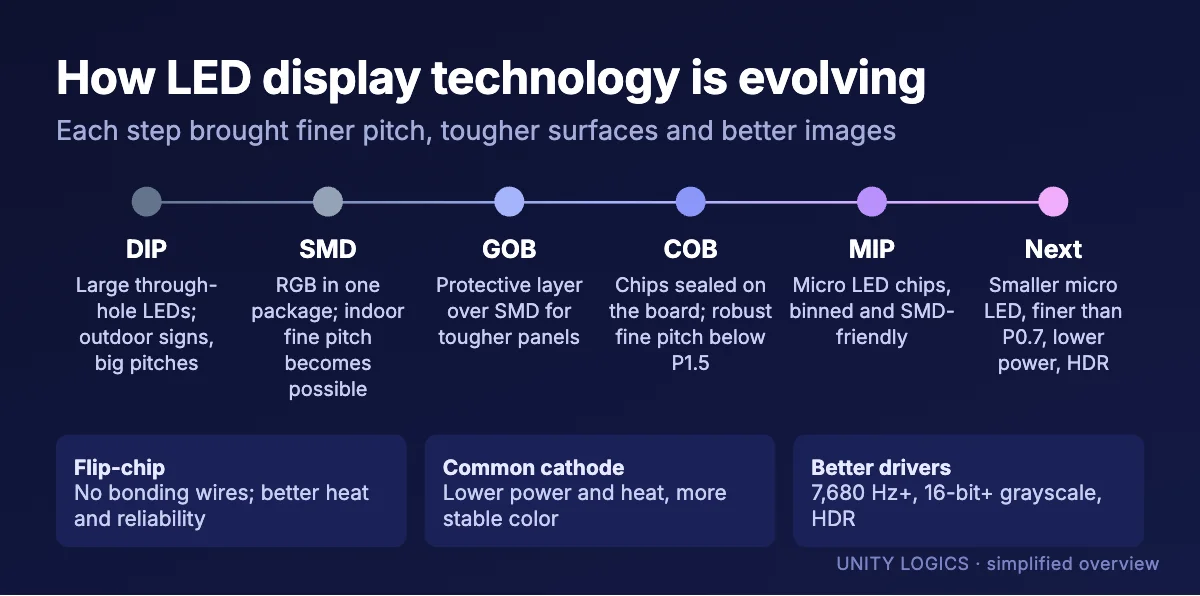
- Finer pitch. Pitches below P1.0 were once rare and very expensive. Fine-pitch COB and MIP have made them practical for boardrooms and lobbies, and pitches below P0.7 are now commercially available.
- Micro LED. LED chips keep getting smaller. Smaller chips mean more black space, higher contrast, lower power and finer pitch. MIP is one way of bringing micro LED into mainstream production.
- Flip-chip. Flip-chip LEDs connect directly to the board without bonding wires, which improves heat transfer and removes a common failure point.
- Common cathode. Supplying each color with only the voltage it needs lowers power and heat and keeps color more stable.
- Better driver ICs and processors. Refresh rates of 7,680 Hz and higher, more grayscale steps, HDR and better low-brightness performance make LED walls look better on camera and in dark rooms.
- New formats. All-in-one LED displays for meeting rooms, curved and flexible panels, transparent LED for windows and LED volumes for virtual production are all growing.
- Lower prices. As production scales up, fine-pitch LED keeps getting more affordable, which is why LED is replacing projectors and large flat panels in more rooms. See our projector vs LED screen guide.
What we offer
We sell and install all four technologies and choose the one that fits the room, not the one with the most buzz. Examples from our range include the Unity LA Series SMD rental and stage panels, the Butterfly Series for indoor installs (SMD with GOB available), Firefly and Black Elves COB LED wall packages from P1.56 down to P0.93, and MIP panels such as the Black Elves MIP, Magic Cube MIP and ArcX MIP for curved designs. As a reference, a 7.9 × 4.4 ft P1.25 Firefly COB package is $18,650, including the processor and mounting.
Want to understand the rest of what goes into a quality screen, from driver ICs to power supplies? Read our LED screen buying guide. Or tell us about your room and viewing distance, and we will recommend the right technology. A free site survey is the best place to start.